Mount Tarawera Hike: The Guided Crater Walk Guide
When Sagar told me about the Mount Tarawera walk, my first reaction was, ah, another one.
Table of Contents
We had recently done the Tongariro Crossing sunrise hike and while I loved watching the first rays of sunshine hit the red crater, I certainly did not enjoy waking up at 2:30am. So when he brought up another New Zealand volcano walk, I was not exactly jumping at the idea.
But I saw how excited Sagar was about this hike so I started looking into it. I was also really surprised to find out it was not a free hike, unlike almost every other hike you do in New Zealand. If you have been searching for a Mount Tarawera hike without guide, or wondering if the Mount Tarawera walk free option exists, the short answer is no to both. The mountain is completely closed to the public and the only way in is through Kaitiaki Adventures.
That was mind boggling to me. And I started wondering, is it even worth it?
Is the Mount Tarawera Hike Worth It And Why Can’t You Do It on Your Own?
Do not think twice. Just do it. And that is coming from a non-hiker blogger.
I know the guided only part might be putting you off if you are used to hiking independently. But there is an interesting history and a deeply sacred reason behind it.
In the early hours of June 10, 1886, the Mount Tarawera eruption began. What followed was six hours of earthquakes, molten rock, ash and columns of smoke that shot 10 kilometres into the sky. The eruption destroyed five Maori villages, killed over 100 people, nearly all of them Maori and completely wiped out the Pink and White Terraces, silica formations on the shores of Lake Rotomahana that were considered the eighth wonder of the world.
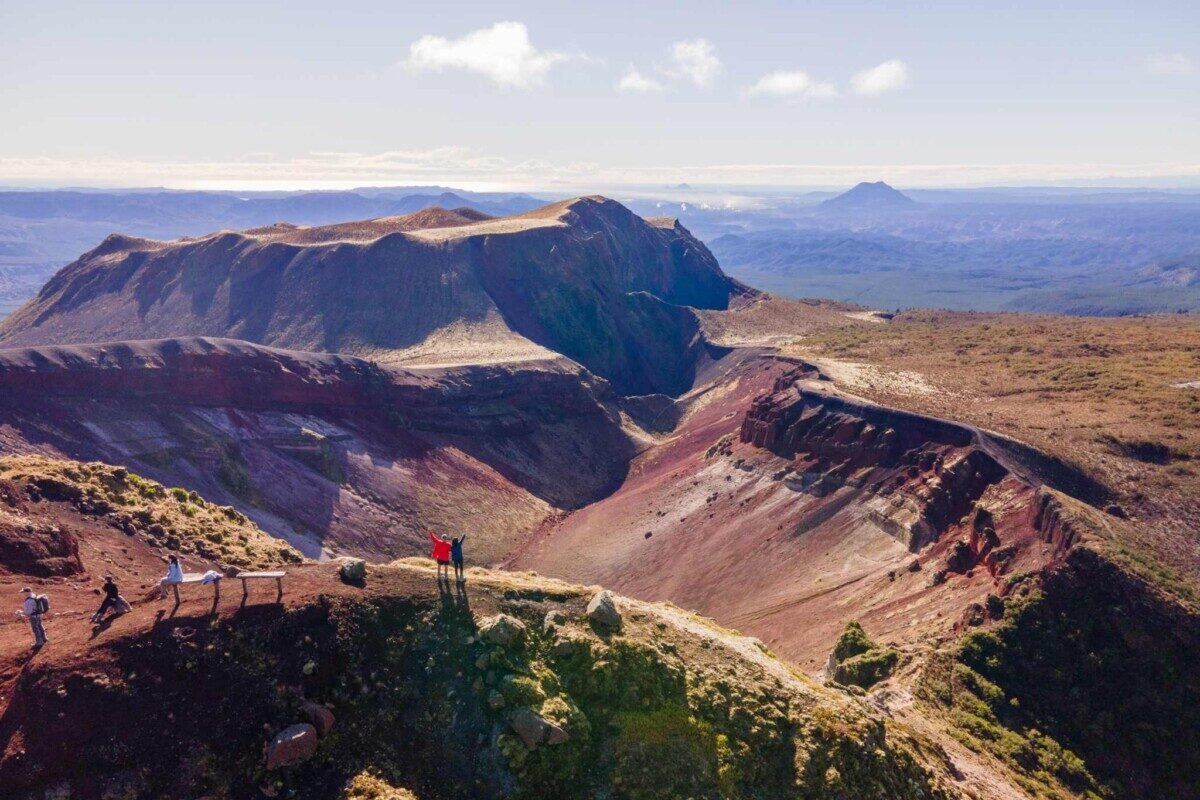
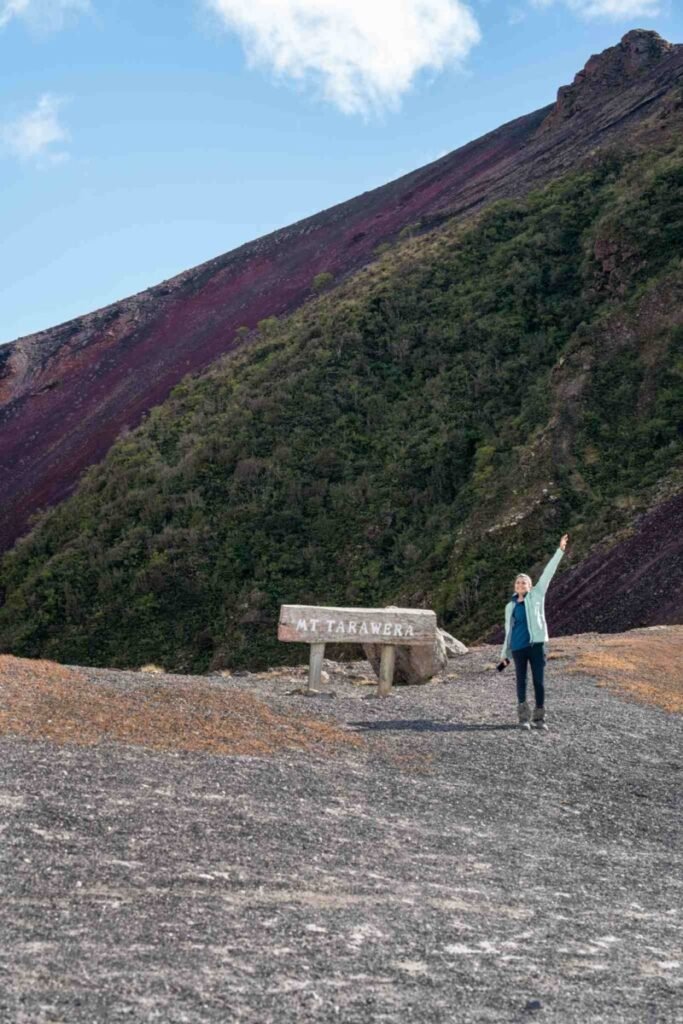
The 17 kilometre long rift the eruption carved through the mountain is still clearly visible today. And that is exactly the landscape you walk through on this hike.
Mount Tarawera is sacred land, a wahi tapu, owned and protected by Ngati Rangitihi iwi. After years of unmanaged tourism causing serious damage to the mountain, the iwi took control in 1999 and granted exclusive access to one operator only, Kaitiaki Adventures, a Maori owned and operated company. They are the only people authorised to take you up there. There is no other way in.
That exclusivity is actually what makes this hike special. The mountain sees far fewer visitors than anywhere else in Rotorua and the guides who take you up are deeply connected to the land and its history.
How to Get to Mount Tarawera
There are two ways to experience Mount Tarawera depending on what you are after.
If you want to do the Mount Tarawera crater walk: Kaitiaki Adventures is your only option. This is the full guided experience, the 4WD drive to the base, the karakia, the cultural storytelling, the guided walk across the crater rim, and the option to run down into the crater itself. This is the one we did and the one I would recommend.
If you do not want to hike: Volcanic Air offers helicopter flights over the volcanic mountains in the region including Tarawera. A completely different experience but a great option if hiking is not for you. Just know it’s quite expensive.
Another option nearby is Waimangu Volcanic Valley, an incredible geothermal walk through a volcanic valley that formed after the 1886 eruption. Very different in feel but both are worth your time if you are spending a few days in the area.
NZ FREE GUIDE
Want the Full New Zealand Guide?
We put together our complete New Zealand travel guide, free. Pop your email in below and we will send it straight to your inbox.
What to Expect on the Day
The Tarawera trail walk is well organised from the moment you arrive. The good thing about this hike is how easy they make it from the start. You can either meet the guides at Te Puia carpark or if you are staying in central Rotorua they will come and pick you up from your accommodation. Te Puia has a cafe and a big carpark, we parked our motorhome there for the day with no issues.
Once you book with Kaitiaki Adventures they send everything through by email. Where to go, what to bring, what to expect.
The Drive to the Trailhead
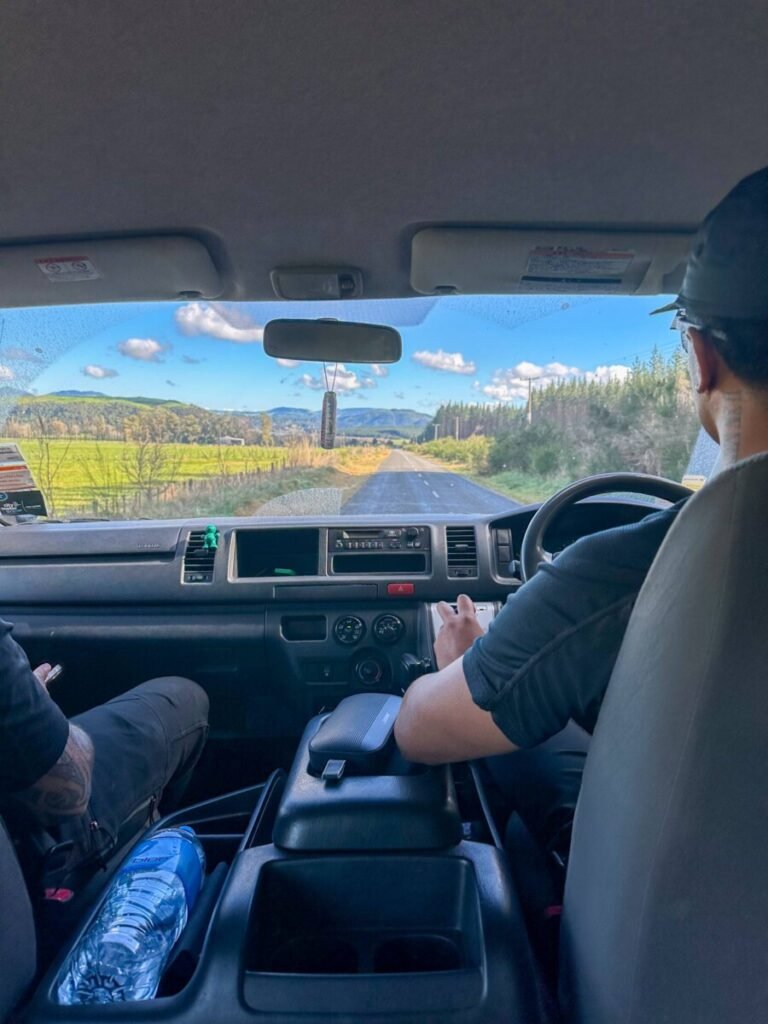
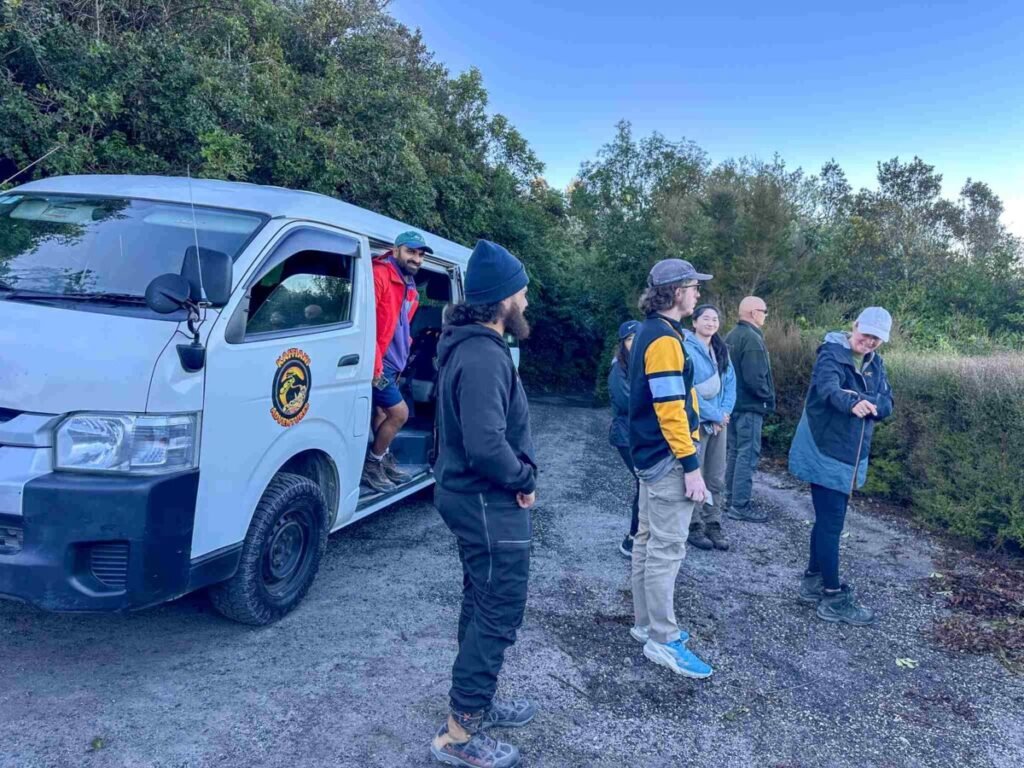
We had four other hikers with us and two guides from the local iwi community. After a quick introduction they drove us about 30 minutes outside Rotorua. Mount Tarawera Rotorua is closer than it looks on a map and getting there is part of the experience.
The last 8km to the trailhead is on a private access road and I am not going to sugarcoat it, it is bumpy, narrow, and unlike any road we have driven in New Zealand. Our guide asked upfront if anyone got motion sickness and made sure I was in the front seat. He kept us entertained the whole way and honestly it felt like being on some off road adventure in rural Asia. We never expected to find roads like that in New Zealand. Unique in the best way.
About halfway up there is a checkpoint with a dump toilet, surprisingly clean, no smell and this is where they give you gaiters. I had never even heard of gaiters before this hike. They stop volcanic sand and scree from getting inside your shoes and they make a real difference on the descent.
The Briefing and the Karakia
One of the guides, named Rangi, then drove us to the start of the trail and gave us a rundown of what to expect. Before we took a single step he did karakia, a prayer to his ancestors asking for safe passage and acknowledging the history the mountain carries. He also pointed out a nearby peak that was once a Maori burial ground and explained how the local iwi continues to protect that land today.
I had signed up for a hike. I did not expect to come away with some of the most fascinating insights into Maori culture and spirituality I have ever heard. Most people go to Mitai Village or Te Puia for a cultural experience but hearing these stories from Rangi while standing on the actual land they are about, that was something completely different.

The Hike Up
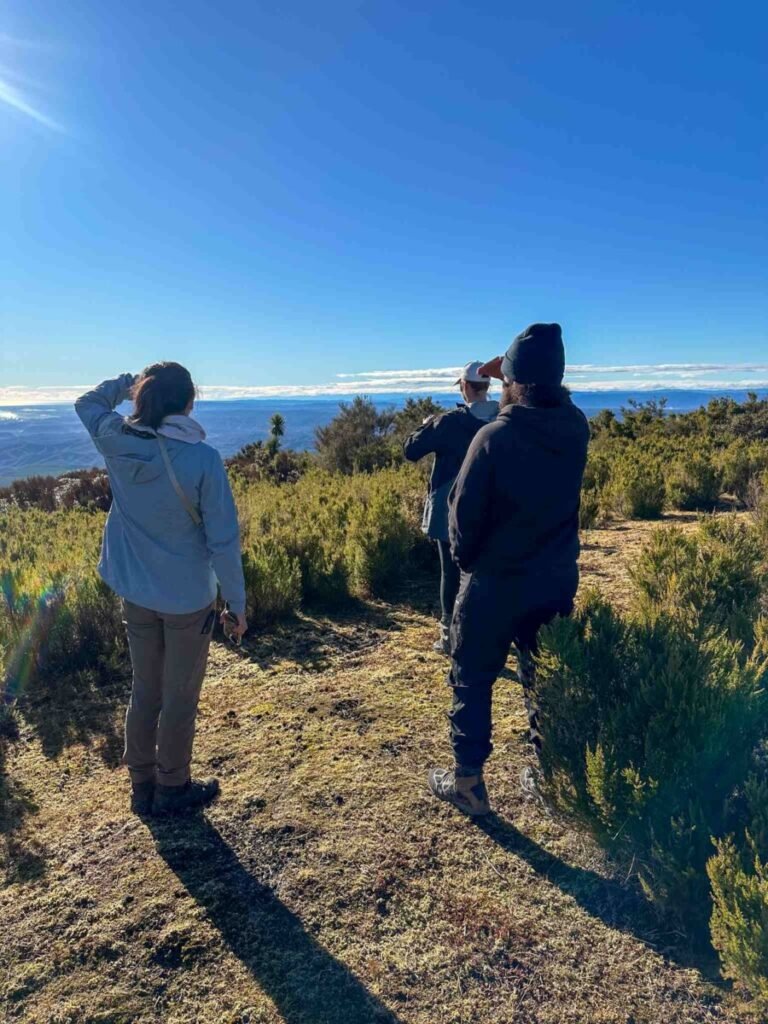
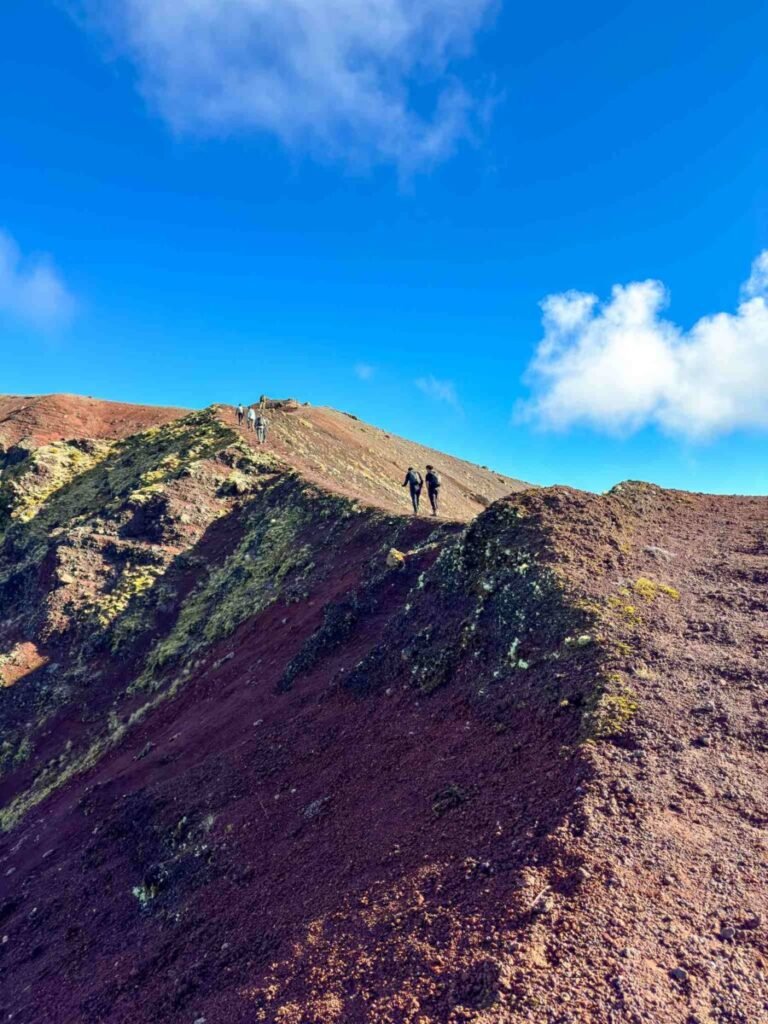
The trail starts in native bush before opening up onto the bare volcanic ridge, and the contrast between the two is striking. The hike itself is more straightforward than it looks. There are one or two steep sections and one that looks absolutely terrifying from a distance but turns out to be the most fun part of the whole day. More on that shortly.
Rangi breaks down every section before you reach it so you always know what is coming. There are benches at every stopping point and he kept the pace relaxed throughout. I never once felt rushed and I am not a hiker by any stretch.
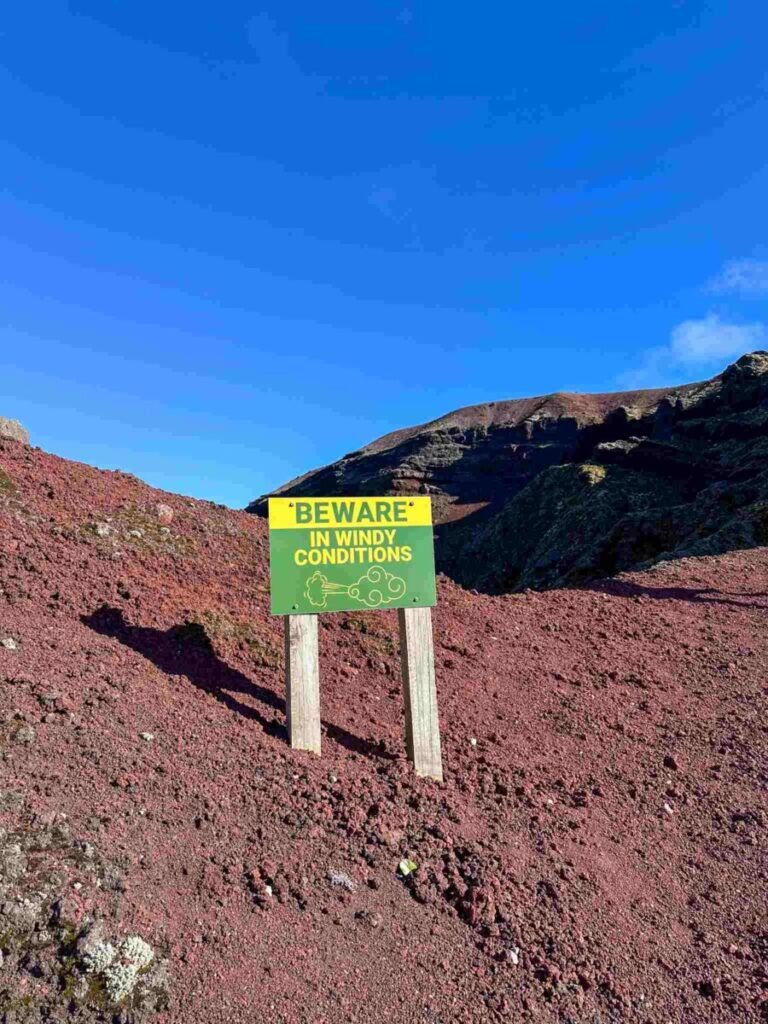
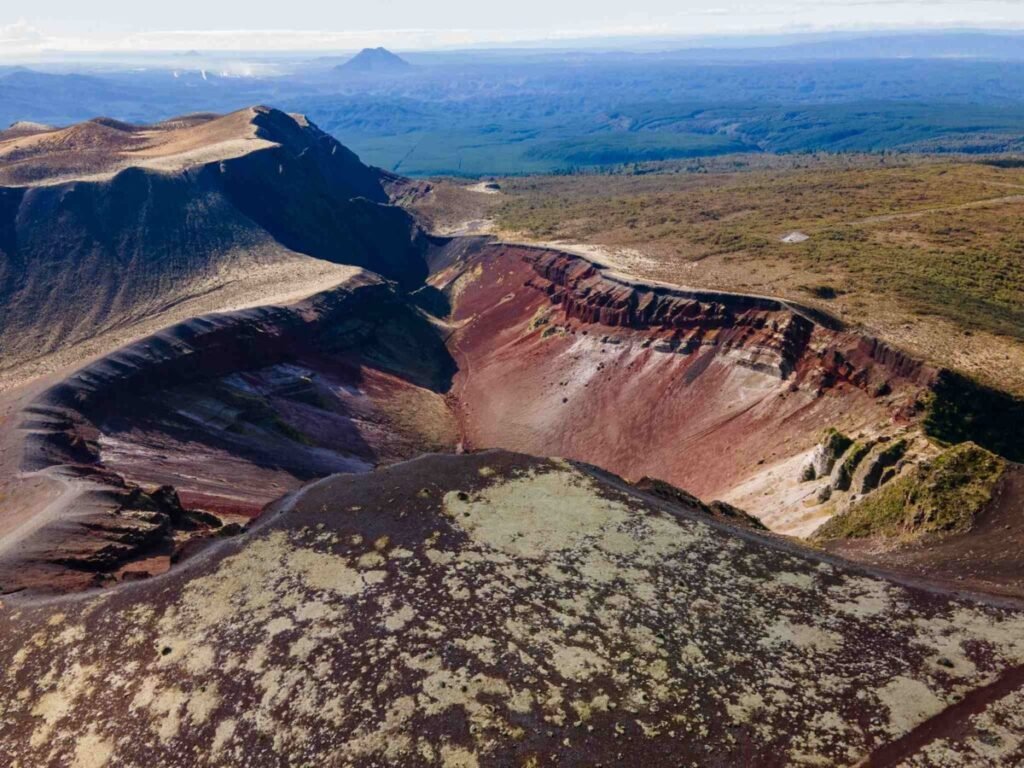
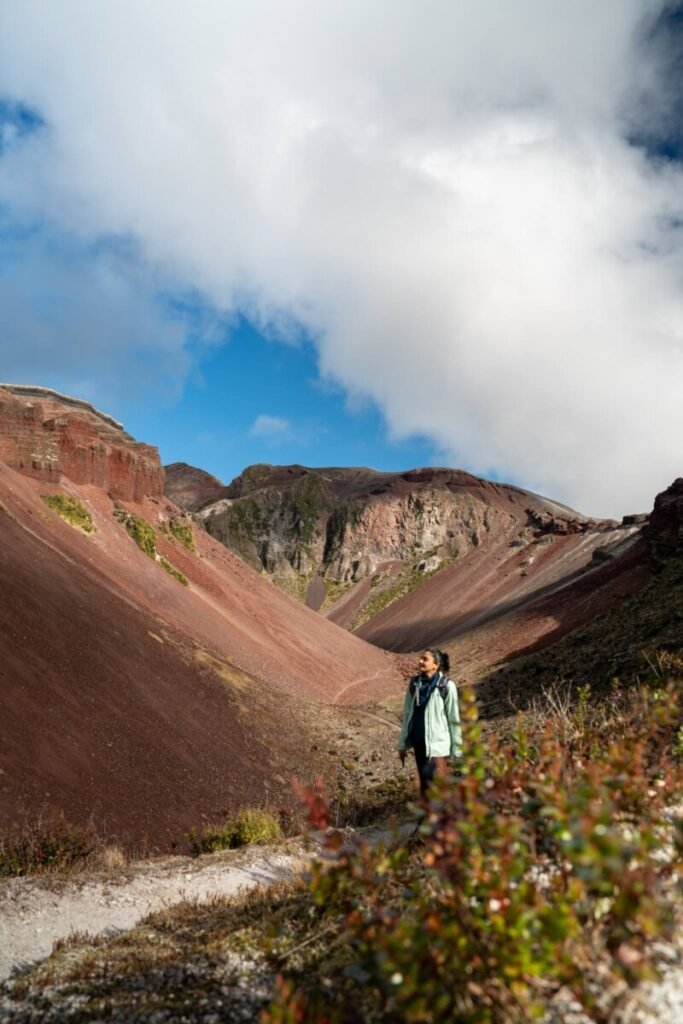
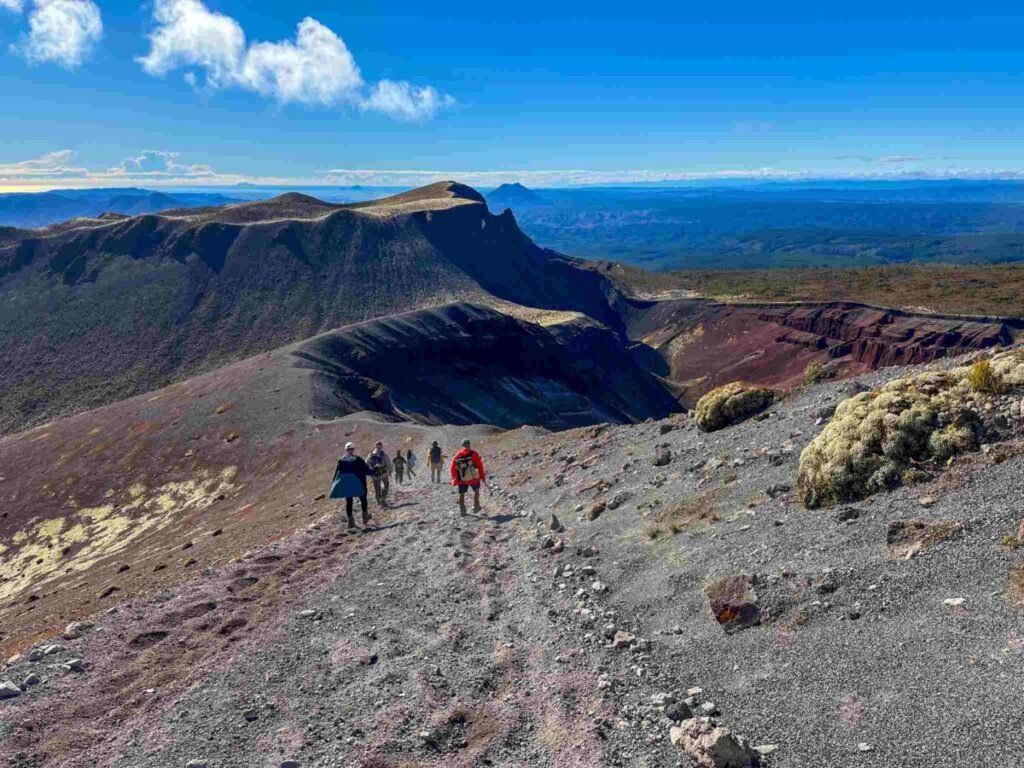
Walking the Tarawera trail ridge is surreal. The landscape is unlike anything else in New Zealand, bare volcanic terrain in deep reds, oranges and blacks stretching out in every direction. Not the kind of viewpoint where you see blue ocean and mountain peaks. Something rawer and more unusual. One of the most unique landscapes I have come across anywhere in this country.
NZ FREE GUIDE
Want the Full New Zealand Guide?
We put together our complete New Zealand travel guide, free. Pop your email in below and we will send it straight to your inbox.
The Summit and the Rock Tradition
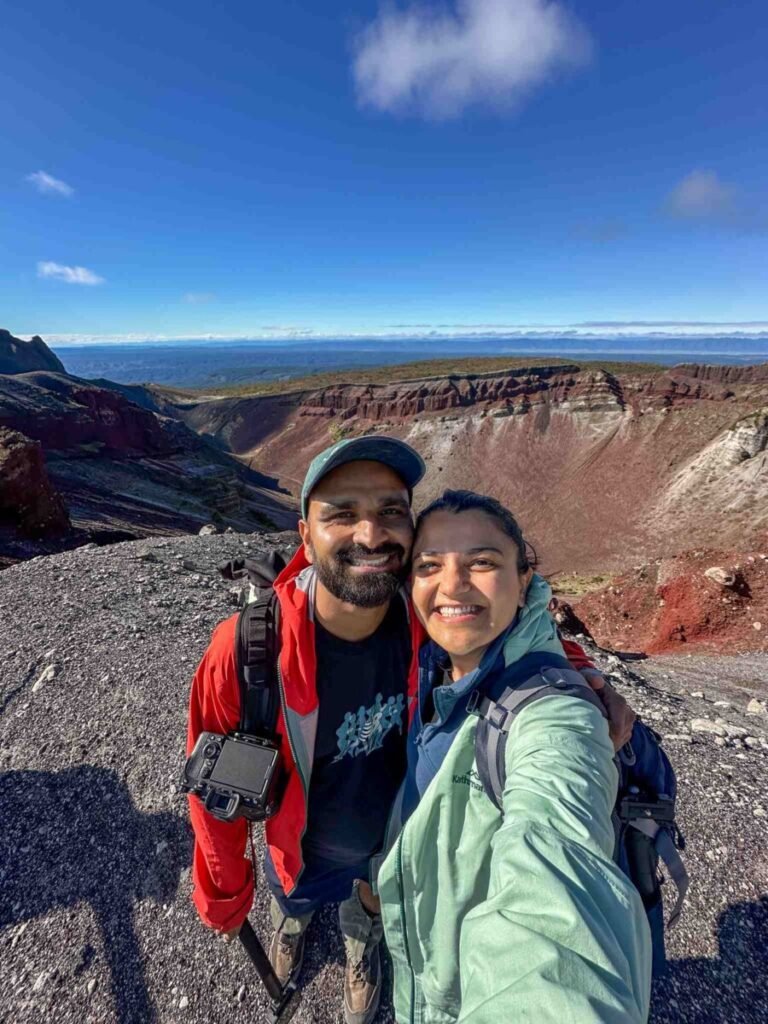
At the summit of Ruawahia, the highest point at 1,111 metres, you get the full 360 degree view. Lake Tarawera sits below you, wide and still. On a clear day you can almost make out the water beach on its far shore, and the geothermal steam rising from the valleys around Rotorua makes the whole panorama look almost otherworldly. Rangi named every lake and mountain we could see and threw in a few games along the way to keep the energy up.
Then he asked us each to pick a rock.
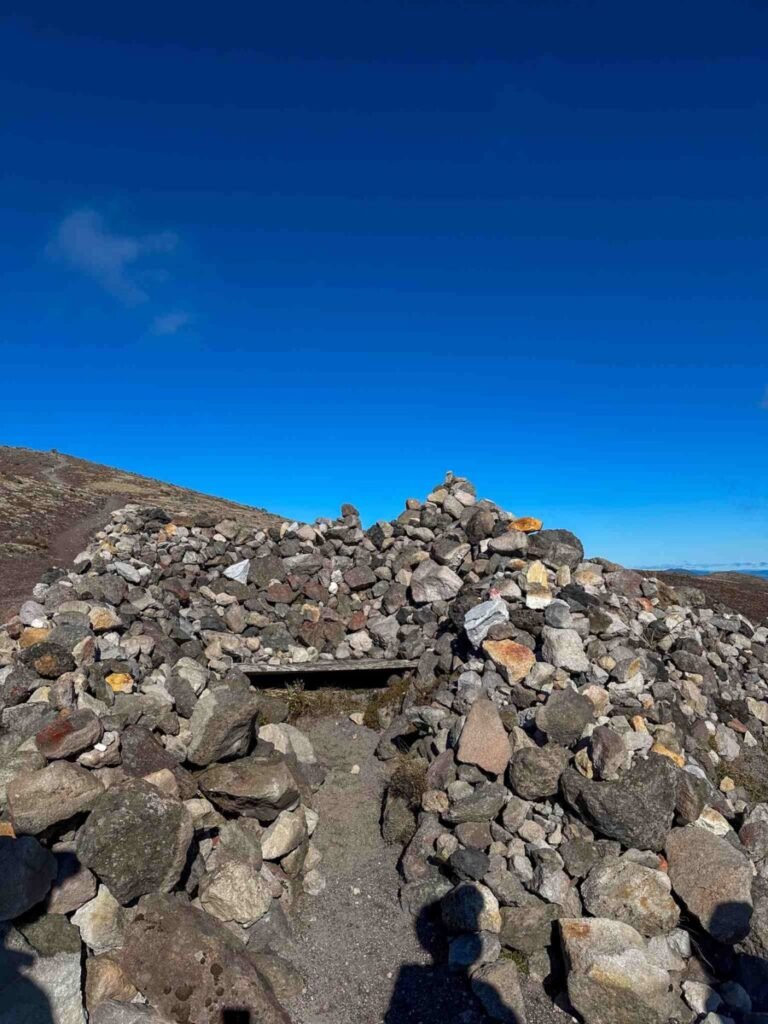
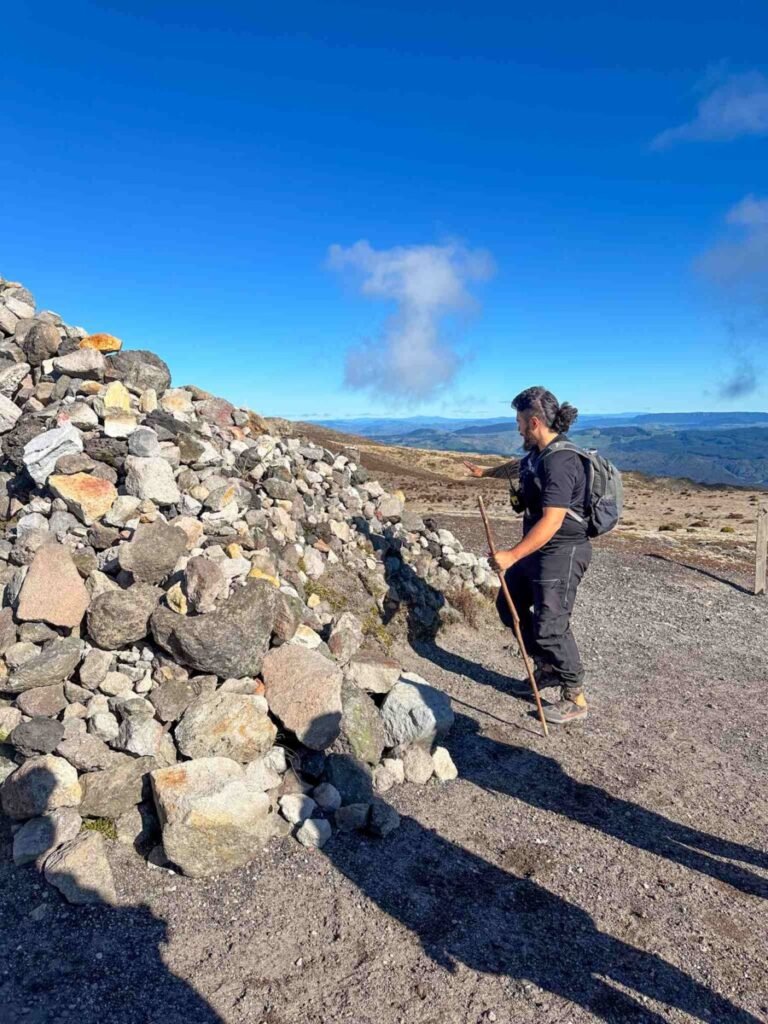
I had no idea what was coming. I picked one that looked like a heart shape. He walked us to a bench that is now completely surrounded by thousands of rocks left by hikers before us.
Rangi and his brother started this tradition. He has been guiding on this mountain for eight years, hiking the same route almost every single day. To make it meaningful for every person who comes up here, they started asking each hiker to choose a rock and leave it at this bench. That bench now looks like a throne, surrounded by thousands of rocks, overlooking what was once a Maori burial ground.
Every single rock represents a person who stood exactly where you are standing and completed the hike. I cannot think of a more special way to feel connected to a place than that.
The Scree Run
When Rangi pointed to the scree slope at the beginning of the hike and casually mentioned that was how we would be coming down, I laughed. Like properly laughed. It looked completely vertical.
Then I looked at his face.
He was not laughing.
I laughed harder, assuming he was winding me up. He looked at me very calmly and said, that is the only way down the mountain. And something about the way he said it made me realise this was absolutely happening.
I told him it was impossible. He promised me it would be fun. And when we were all standing at the top of that slope, hearts in our mouths, he gave us one instruction.
If you want to stop, you have to jump.
He made us all demonstrate before he let anyone go. And then it started.
I felt like a complete kid. What looked terrifying from the top was the most fun I had all day. Sliding down a volcanic scree slope on your feet, completely out of control in the best way, I was not expecting that at all.
1:1 PLANNING CALL – $70
Not Sure Where to Start? Let’s Talk.
Book a 60 minute call with us and we will help you plan your New Zealand trip, one on one.
The Way Back Down
After the scree the hike levels out with one last steep section before you are back at the vehicles. The guides keep the energy high the whole way and before you know it you are back at Te Puia wondering how it went so fast.
We did the Half day hike and I think it is enough. You get the full experience, the history, the culture, the crater, the views, the rock tradition, the scree run, without it feeling like too much. It is honestly one of the best half days we have spent in New Zealand.
How Difficult Is the Mount Tarawera Hike?
Honestly, not that hard. Some sections are steep and the scree descent looks intimidating from the top but nothing you cannot handle. I have done the Tongariro Crossing and Roys Peak, and the Mt Tarawera hike is far more manageable than both. Whether you call it the Mt Tarawera walk or the Mt Tarawera hike, you do not need to be an experienced tramper to enjoy it. It is a similar level to the Mount Tauhara hike in Taupo, maybe slightly more dramatic in terms of scenery. The guides also make sure everyone is comfortable throughout.
How long is the hike? What to Wear and Bring
We did the half day option which runs around four to five hours from start to finish. There is also a full day version if you want more time on the mountain.
We did the hike in May so it was starting to get cold in the mornings. Wear layers and remove them as you warm up on the climb. That is the best approach for New Zealand’s unpredictable alpine weather.
Kaitiaki Adventures do not provide food or water so pack some energy bars and make sure you have enough water. For a half day hike between two of us we carried 2 litres total and that was fine.
For camera gear, unless you are a professional photographer, leave the DSLR at home. An Insta360, GoPro, or DJI Action camera is the better call. The scree run especially is best captured on something tough and compact that you can actually use while moving.
And never skip sunscreen in New Zealand, even on a cloudy day. If you get motion sickness, keep some mints handy for the bumpy drive in, they really helped me.
Pricing and How to Book
The half day Mount Tarawera hike starts from $209 NZD per person. Check Bookme before you book as they sometimes have last minute deals available.
Also, always check on Get Your Guide if they have any special promo going on. Book Here.
If you want to extend the day, Kaitiaki Adventures also offers a hike and rafting combo with white water rafting on the Kaituna River, the same stretch that takes you over Tutea Falls, the highest commercially rafted waterfall in the world. The combo is $335 NZD per person. If you can, do both. The rafting is an absolute blast and the two activities together make for one of the best full days you can have in Rotorua.
I am glad Sagar pushes me to do hard things. I would never have signed up for this hike on my own and I would have completely missed out on one of the best experiences we have had in New Zealand.
If you are heading to Rotorua, this one is worth every dollar. It is the kind of travel experience that stays with you long after you leave.
For more Rotorua hikes, walks, and things to do, check out our full guide to the best Rotorua hiking and Rotorua walks in the area. And if you are still figuring out where to stay, we have covered every option across every budget. where to stay in Rotorua.
CUSTOM ITINERARY
We Can Build Your New Zealand Trip For You
Skip the hours of planning. Tell us how you want to travel and we will hand you a complete, day by day itinerary built just for your trip.