
Freedom Camping in New Zealand: A Practical Guide (How It Actually Works)
This post contains affiliate links. See our full Affiliate Disclosure here for details.
Freedom camping in New Zealand (often called free camping) sounds exciting until you wake up to a $200 fine on your windscreen. Suddenly, what felt like freedom becomes confusing and frustrating. After living and travelling around the South Island in our tiny campervan, Wander Bee, we’ve learnt that freedom camping in NZ isn’t complicated once you understand the basics. And when done right, it can completely change your campervan experience.
Mini Guide to New Zealand Trip
Short on time? Here’s a quick guide to New Zealand to help plan your trip.

Where to stay:
Voco Auckland – (IHG Hotel, great location)
Rydges Rotorua– (Superb location)
Queenstown – Check out this post
Wanaka – (Unique stay)
Twizel – Airbnbs (Perfect to explore Mt Cook/Tekapo)
Best time to visit: Read HERE
Things to Do:
Waitomo Caves / Hobbiton
Rotorua cultural experiences / Geothermal Park
Queenstown Bungee / Sauna / Shotover Jet
Wanaka Skydiving /Roys Peak Track /Isthmus Peak
Mt Cook Ski Plane / Hooker Valley Track
Lake Tekapo Stargazing / Lupins / Church of the good shepherd
Connectivity and Travel Insurance:
eSIM – Use SAGARAMI1GB to get 1GB free data on any global plan
Travel Insurance – It has been our go-to for the last 2 years.
Table of Contents
Freedom Camping Rules in New Zealand
What Is Freedom Camping in New Zealand?
Freedom camping in New Zealand means staying overnight in designated freedom camping sites without paying campground fees. The local councils and the Department of Conservation (DOC) manage these freedom camping spots, and they’re often located in incredibly scenic places.
Freedom camping comes with clear limits. Each area comes with specific rules, and campers are expected to follow basic guidelines around waste, parking, and behaviour. Most freedom camping fines in NZ don’t happen because the rules are complicated, but because people assume the same rules apply everywhere.
Where you can and can’t freedom camp in New Zealand
Local district councils set freedom camping rules in New Zealand, deciding where freedom camping is allowed and under what conditions. That’s why something that’s fine in one town might be banned in the next.
A good example is Queenstown-Lakes District Council, which recently updated its freedom camping rules. They removed quite a few freedom camping spots and made enforcement stricter. We’ve seen quite a few travellers get caught out here, especially if they were relying on old blog posts or outdated freedom camping apps.
The good news is, you don’t need to memorise every council’s rules.
In real life, the most reliable thing to do is check the signage at the site itself. Council and DOC signboards clearly tell you:
Some freedom camping sites have basics like toilets or rubbish bins. Others have nothing at all and expect you to be fully self-contained. If a sign says “self-contained vehicles only,” that rule applies, even if the spot looks quiet or unofficial.
DOC-managed land works slightly differently. The Department of Conservation manages its own DOC campsites, and the rules vary from place to place. Again, everything you need to know is shown on the sign when you arrive.
At a high level:
Freedom camping in New Zealand can feel confusing at first. But once you get into the habit of checking the sign and knowing whether the council or DOC is managing the land, it honestly becomes pretty straightforward.
Self-Contained vs Non-Self-Contained Vehicles
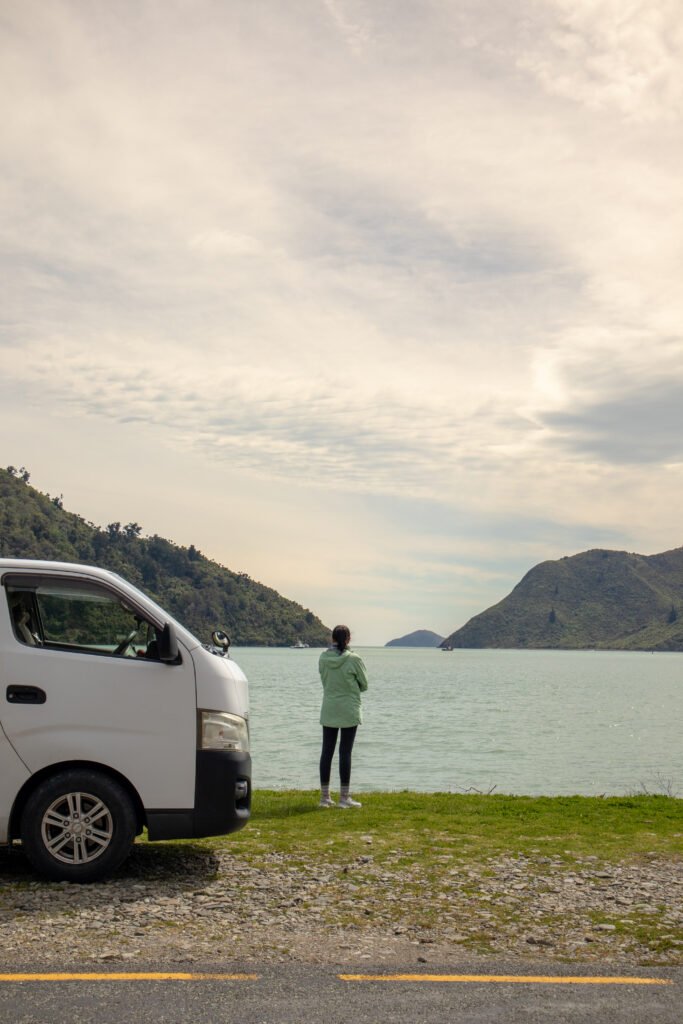
New Zealand recently updated the rules for self-contained freedom camping. Under the new standards, a vehicle qualifies as self-contained only if it meets the updated requirements and displays a green self-containment certificate on the van.
In real life, this means your van needs:
If you’re renting or buying a van, always double-check that the green sticker is actually on the vehicle. This catches people out more often than you’d think. You might still see vans with a blue certificate. That was the old system. They’re slowly being phased out and will no longer be valid after June 2026.
If your vehicle doesn’t have a self-contained certificate, you can’t stay at freedom camping sites that are marked “self-contained vehicles only.” We’ve seen people rent cars with rooftop tents, ground tents, or basic cooking gear and assume they’re allowed everywhere, but those setups are not considered self-contained, even if they look well-equipped.
If you’re travelling without a self-contained van, you can still stay at holiday parks and some DOC campsites. It does add a bit of cost to your accommodation, but many of these places are genuinely beautiful and often in great locations.
Fines & enforcement (how you could get A fine)
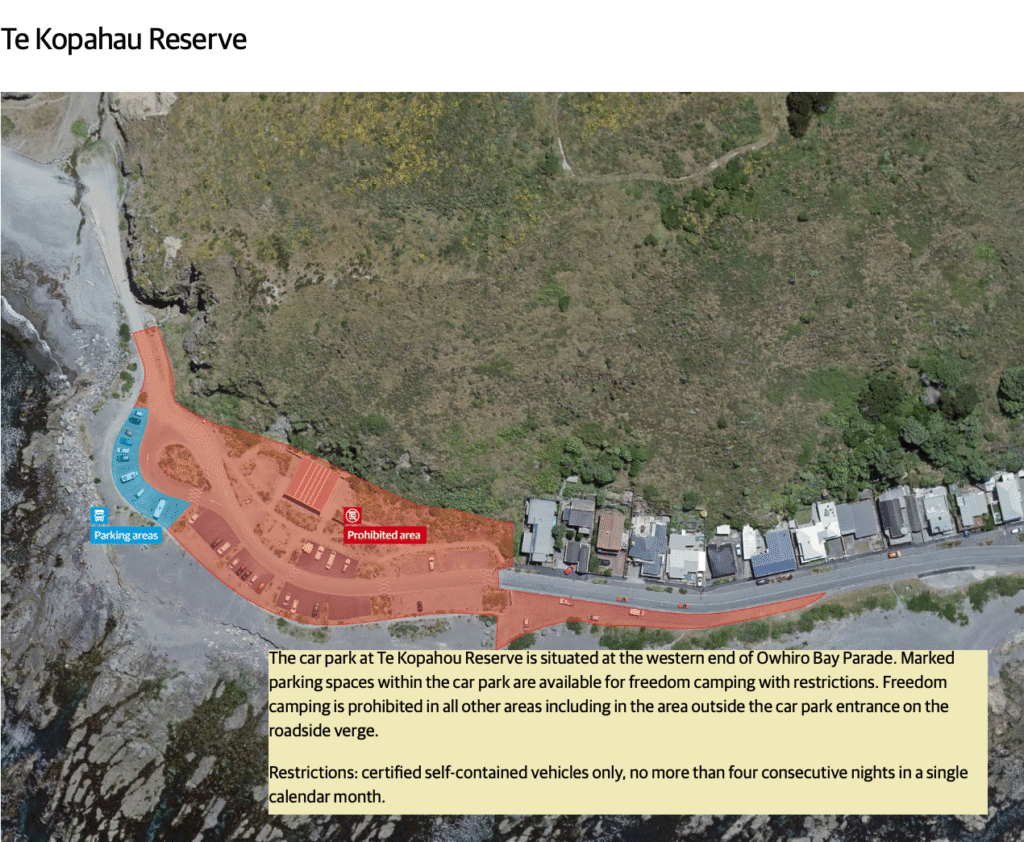
There’s a beautiful coastal freedom camping spot in Wellington that looks perfect. You see a bunch of vans already parked up and think, yep, this must be allowed. You pick the spot that feels right, settle in for the night, and go to sleep feeling pretty pleased with yourself.
The next morning, you wake up to a $400 freedom camping fine on your windscreen, and the first thought is always the same: how did I get fined when everyone else didn’t?
We’ve seen this happen a lot while freedom camping in New Zealand. What usually catches people out is that even within legal freedom camping sites, you can’t park just anywhere. Many locations only allow overnight stays in clearly marked self-contained vehicle bays.
So yes, you might be inside a freedom camping area, but still parked in the wrong spot.
Every site has a signboard with a map showing exactly where overnight parking is allowed. This applies whether you’re freedom camping in Wellington, on the North Island, or anywhere else around the country. If those designated spots are full, you’re expected to move on and find another site for the night.
This is especially common when people arrive late. You pull in after dark, see other vans around, and don’t properly check the sign or miss the map altogether. By morning, the enforcement has already been through.
Most freedom camping fines in NZ don’t happen because people are trying to break the rules. They happen because someone didn’t read the board properly, or assumed that if others were parked there, it must be okay.
How to find legal freedom camping spots
This is where most people get stuck, not because freedom camping in New Zealand is hard, but because they end up guessing instead of feeling confident.
Yes, there are apps to find freedom camping sites. The two most commonly used ones are Rankers and CamperMate. We use them too. Google Maps can help sometimes as well, but the real game-changer and the one most people completely overlook is local council websites.
We learnt this the hard way while trying to find a legal freedom camping spot in Nelson CBD. We checked all the apps and couldn’t find anything suitable. Out of frustration, we decided to look directly at the council website, and that’s when everything changed.
We found three legal freedom camping spots right in the city, and two of them even had toilets. Consider this our little secret.
The only downside with city-centre freedom camping is that it’s not always quiet. Shops and cafés tend to open early, so sleeping in isn’t guaranteed. Some sites also require you to leave by a specific time, often around 7 am, which is worth knowing before you commit for the night.
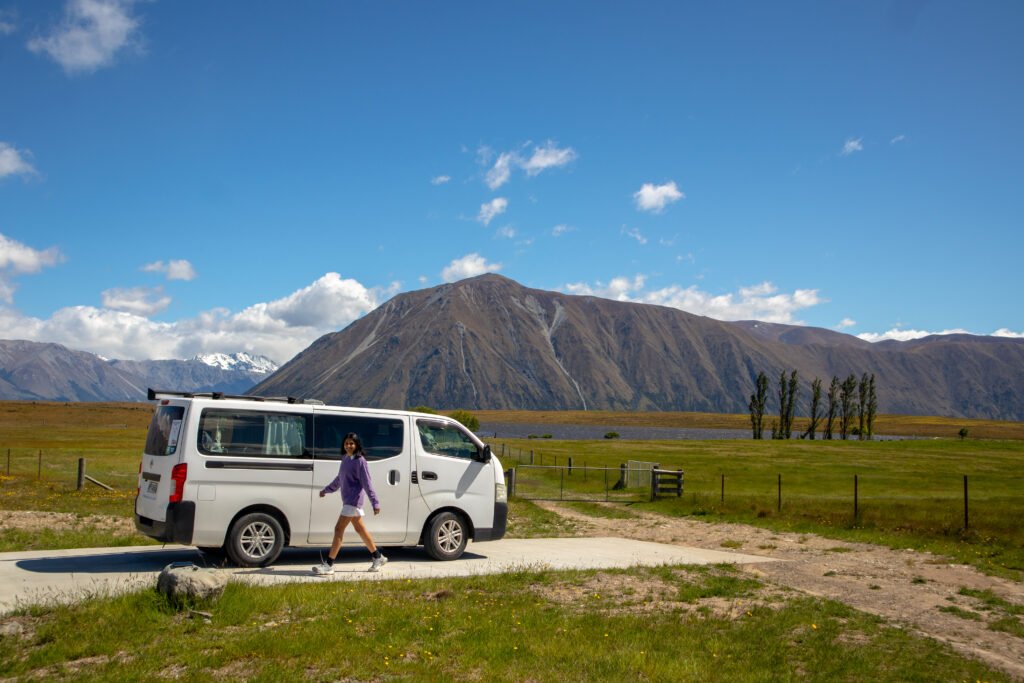
If you’ve been driving all day, the last thing you want to do is guess whether freedom camping is allowed or not. What works best for us is keeping it simple. We always line up three legal options within a 30-minute radius, so if one’s full, we’re not scrambling last minute.
When you get there, always do the same three things: check the sign, check the marked bays, and then park up. The key here is planning ahead and arriving early, especially during peak season. That’s what turns freedom camping from stressful into easy.
How Freedom Camping Works in Real Life
Toilets, showers, laundry
Once you’ve sorted the basics of freedom camping, the next big thing people worry about is hygiene, especially showers. If you’re road-tripping for a short time, the easiest option is to mix freedom camping with holiday parks or higher-end DOC campsites. Most of these have proper facilities, including showers. Some are coin-operated (usually $1–$2), while others include showers in the nightly rate.
If you’re travelling long-term like we are, those costs add up quickly.
What works really well for us is using local community pools. Almost every town has one. You can swim if you want, or just use the hot showers, and they’re usually unlimited. Prices typically range from $3–$6, depending on the location, which makes them a really affordable option on longer road trips.
Laundry works in a similar way. Holiday parks often have machines, but so do town laundromats, which are easy to plan around once you get into a rhythm.
Water, rubbish, and staying respectful
This is the part where common sense matters more than anything else.
A good example is Auckland. Despite being New Zealand’s biggest city, there’s no freedom camping allowed in the CBD. It’s been a big topic of discussion in recent months, largely because of repeated issues caused by campers not respecting shared spaces.
The reality is, freedom camping exists because councils allow it, and that can change quickly if people abuse it. Some freedom camping sites provide rubbish bins, but many don’t. If bins are full or not available, you’re expected to take your rubbish with you and dispose of it later. There are plenty of public rubbish facilities around towns, petrol stations, and supermarkets.
One thing that’s especially important and often misunderstood, is wastewater. Grey water and black water must only be emptied at official dump stations. Even though it’s “waste water,” that doesn’t mean it can go into storm drains or public toilets. Dumping anywhere else is illegal and one of the fastest ways freedom camping spots get shut down.
Public toilets are for using the toilet only, not for emptying tanks or washing dishes.
The good news is that dump stations are surprisingly common and easy to find using apps like CamperMate or Rankers.
As for water, tap water in New Zealand is generally safe to drink. Public taps are common, especially at parks, campgrounds, and dump stations. If water isn’t potable, it’s clearly marked, so when there’s no sign saying otherwise, it’s usually fine.

Is Freedom Camping Right for You?
If you’re wondering whether freedom camping is actually for you, let’s simplify it. Freedom camping in New Zealand gives you access to some of the most beautiful and sometimes almost sacred places in the country. And yes, the big draw is that it’s free.
If you’re travelling on a budget and want to save money somewhere, this is where it makes the biggest difference. We’ve been on the road for over three months now, and so far we’ve spent just $178 NZD on accommodation.
Even though our van is self-contained, we still rely heavily on public toilets and honestly, New Zealand is pretty amazing for this. Free, clean toilets (95% of the time)are everywhere. But if you’re very picky about using public facilities, freedom camping might not be the best fit for you. Some of the best DOC freedom camping sites only have long-drop toilets, which can be a deal-breaker for some people.
Weather is another thing people don’t always think about. Freedom camping is amazing when the weather’s good, but rain, wind, or cold nights can make it feel a lot less enjoyable, especially if you’re parked somewhere exposed with no shelter.
So, is freedom camping worth it?
Freedom camping also works best if your setup is simple. If you’re travelling short-term and your van doesn’t have a proper second battery or solar setup and you need power every couple of days, a hybrid approach usually makes more sense. Mixing freedom camping with holiday parks or DOC campsites gives you showers, power, and a reset when you need it.
One other thing worth being honest about: freedom camping isn’t always quiet or flexible. Many sites only allow one or two nights, and some are close to roads or towns. Early mornings and regular moving are just part of the deal. When it works, freedom camping feels incredible. When it doesn’t, paid camps can make the whole trip feel easier, and there’s nothing wrong with that.
Freedom camping in New Zealand lets you experience the country in a way that feels raw, slow, and real. It’s not perfect, and there will be moments that test your patience bad weather, early mornings, full sites, or plans that change last minute.
But when it works, it really works. Waking up in places that feel untouched, cooking dinner with a view, and falling asleep to the sound of the ocean or wind through the hills, those moments are hard to replace.
Freedom camping isn’t about doing everything right. It’s about understanding the basics, respecting the places you’re in, and giving yourself enough flexibility to adapt.
If you ever feel stuck or overwhelmed while planning your New Zealand road trip, that’s okay too. We’ve been there more times than we can count.
3 Comments